
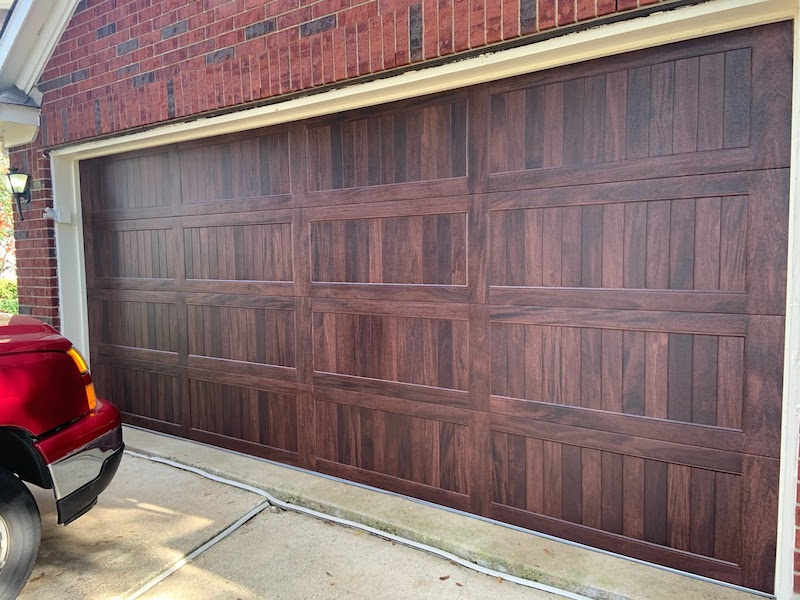

Garage Door Sizes: Choosing the Right Fit for Your Austin Home
Garage doors are not one-size-fits-all, so guessing is not an option. Pick the wrong size, and you’re stuck with an ill-fitting door that won’t close, blocks your truck, or you eventually have to replace it.
The good news is that finding the correct size is easy when you know what you’re looking for. From small cars to lifted trucks, we have the door to make life easier for you AND your daily uses.
Here’s What You’ll Get Out of This Guide:
- Buying a garage door? Know these standard sizes first
- An intro to garage door sizes (and which one you should buy)
- Tips for avoiding common measurement mistakes and why getting the right size matters before you buy anything!
- Learn what size garage door fits your home. We’ll help you determine what size garage door you need to boost your home’s function and curb appeal.
- Learn about standard garage door sizes. Plus get insider tips for Austin truck, ADU, and home gym owners!
What Are the Standard Garage Door Sizes?
Garage doors vary in size based on what kind of garage they fit. Most single garage doors are 8 feet wide by 7 or 8 feet tall. The standard double garage door is 16 feet wide by 7 to 8 feet tall.
Here’s a brief overview of standard garage door sizes:
| Door Type | Width (ft) | Height (ft) | Best For |
| Single Car | 8–10 | 7–8 | Sedans, small SUVs, compact cars |
| Double Car | 16–18 | 7–8 | SUVs, trucks, two-car garages |
| RV or Oversized | 10–16 | 10–14 | RVs, lifted trucks, boats |
| Custom | Varies | Varies | Unique builds, detached garages |
Standard sizes work fine if you have a Prius or Camry. They’re also more common, so we keep those sizes in stock.
The Big Truck Truth: Austin Needs an 8-Foot Height Standard
Austin is not filled with sedans. From Giga Texas employees flaunting their new Cybertrucks to the thousands of lifted F-150’s and Silverados cruising through Round Rock, Leander, and Cedar Park—you’re asking for trouble with a 7-foot door.
The trend towards the 7-foot door is dead in Austin. If you have a full size pickup truck or an SUV with a Yakima roof rack and live in Cedar Park, Hutto, or just about any suburb in-between—you’re measuring for an 8 foot height. We cannot count how many Austin homeowners have installed a standard 7-foot header only to rip off their roof racks on the garage. If you’re building new or remodeling, do yourself (and your resale value) a favor and make it 8 feet.
Quick Reference Guide for Austin-Specific Garage Door Sizes:
| Door Type | Size (W × H) | The Austin Use Case |
| Urban Single | 8’ × 7’ | East Austin ADUs & older North University bungalows |
| The Suburban Standard | 9’ × 8’ | New builds in Pflugerville; ideal for SUVs with roof racks |
| The “ATX Double” | 16’ × 8’ | The Gold Standard. Fits two cars + room for the lawnmower. |
| The “Hill Country” XL | 10’ × 9’ | Lifted trucks & Sprinter vans in Dripping Springs or Leander |
Garage Door Size for Every Type of Vehicle
Wondering what size garage door your vehicle needs? Here’s a breakdown by car type to take the guesswork out of “Will my car fit?”
Cars & Sedans
Size: 8’ × 7′ or 9’ × 7′
If you live in South Austin and have a vintage Bouldin Creek or Zilker bungalow, you’re probably working with limited ‘70s or ‘80s garage square footage. Standard garage doors are typically 8’x7’ here. We frequently work with clients in South Austin to customize every inch of width possible to fit their modern SUV’s.
SUVs
Size: 9’ × 8′ to 10’ × 8′
Driving a larger vehicle such as an SUV (Ford Explorer, Subaru Outback, Toyota Highlander, etc.)? You’re going to need a few extra inches of width and height. We recommend a 10-foot wide door to avoid scraping your side mirrors or rear-mounted cargo if you have a roof rack or hitch-mounted carrier. A double-wide garage door (either 16- or 18-foot wide) will allow you to park two SUVs side-by-side.
Pickup Trucks
Size: 10’ × 8′ minimum
Got an F-150, Silverado, Ram or other full-sized pickup truck? You definitely don’t want to have to fold in your side mirrors every time you pull into the garage. If your truck is lifted, or if you have a roof rack, light bar or other accessories, that extra vertical room can be a lifesaver. Most trucks need at least 22–24 feet of garage depth to accommodate length and close the garage door without forcing you to pull forward.
RV’s, Boats, Oversized Vehicles
Size: 12’ × 10′ or larger, up to 14’ × 14′
Cars and trucks aren’t your thing? Installations for RV’s, trailers, boats, larger trucks or oversized vehicles require a custom or oversized garage door and heavier-duty track and opening system. We do this all the time—just give us a call and we’ll walk you through your options.
Austin ADUs & “Tall-and-Skinny” homes
Our urban infill boom has sprung up in pockets all over town—East Austin, the 78704 zip code, Crestview and more. ADUs and “tall-and-skinny” homes are the new trend in Austin, and sometimes you only have inches to spare on your driveway.
Building an ADU or renting to students in East Austin? These homes are notorious for having limited space to work with. Standard garage doors are 9-feet wide, but many homes in urban Austin can only accommodate an 8-foot wide garage door to meet city set backs. At RGertmenian Garage Doors, we love finding that Goldilocks size door that will open up your driveway just enough without making it difficult to fit your car.
Don’t build that slab until you’ve talked to us. We can help you design the right size garage door opening for your space the first time.
Garages as Living Space: The “Texas Basement”
Austinians love to repurpose their garages into workshops, home gyms, and music studios. But without basements, garages are the “Texas Basement”—that extra room you don’t know what to do with!
The garage is the heart of your “Texas Basement,” so make sure it’s planned out properly. Need room for a squat rack or pull-up bar? Check out our High-Lift Tracks to maximize your overhead space.
Garage Door Planning Tips for Home Studios, Gyms, and More:
- Use a high lift track to maximize headroom for home gyms
- The garage is the “Texas Basement,” so make sure it’s planned out properly.
“Austin Modern” Curb Appeal: Proportion is Key
That black aluminum frame with frosted glass? Popular right now in East Austin and South Austin neighborhoods, and for good reason. When installed correctly, a garage door can really make or break your home’s “Modern Austin” curb appeal.
Take advantage of wide format door styles to achieve this look.
Make sure you’re getting the proper proportions. We typically suggest a single 16-foot-wide double door instead of two 8-foot sections. Not only does this look better in most homes, but two tall doors without a post in the middle create a sleeker look.
Think you want the modern look? Get a door with full-view glass and take advantage of wide-format door styles.
When You Might Need an Oversized or Custom Door
Here are some actual scenarios from customers who have had us install custom or oversized garage doors around Austin:
- You own a lifted truck or full-sized SUV
- You want to park your RV, camper van or trailer in your garage
- You keep boats, jet skis or oversized equipment in your garage
- You are constructing a detached garage, workshop or barn style building in the Hill Country
- You need High-Lift Tracks to maximize space for a home gym or work area
- You simply desire more width or height for easier passage
In Georgetown, we see two extremes. In Sun City, many homes come standard with doors which need to swing inward for either golf cart side-entry or ease of use. Then there is Berry Creek, where almost everyone has custom carriage-style doors. Since Georgetown HOAs tend to be stricter on architectural aesthetics, ordering your door with the correct ‘stamped-steel’ or ‘faux-wood’ overlay will help it pass inspection and fit your vehicle.
Common Oversized Garage Door Sizes
| Use Case | Common Size (W × H) |
| Lifted Trucks | 10′ × 8′ or 10′ × 9′ |
| RVs & Campers | 12′ × 10′ or 12′ × 12′ |
| Boats & Trailers | 14′ × 12′ or larger |
| Custom Builds | We’ll design to fit your setup |
The “Uri” Factor: Why Size & Insulation Go Hand-in-Hand in Austin
Winter Storm Uri may have burned itself into Austinites’ memories last year. But hot Texas summers are a far bigger threat to both your garage and your electric bill on a daily basis. If you install a larger door, you’re also increasing the surface area the sun can heat.
Larger doors (we’re talking about 18-foot doubles here) equal more surface area for the Texas sun to shine on. When it comes to Austin, size and R-value go hand-in-hand. An oversized 18’ × 8’ door without high-grade insulated steel (R-12+) will have your garage hitting 110°F by July noon time. No worries. We’ll help you weigh your size needs with insulation requirements to keep your Austin electric bills manageable.
A well-insulated garage door can also keep your home’s HVAC system from overworking itself on any shared walls. And if your garage is attached to your house, or you spend any significant amount of time in your garage, insulation (aka R-value) should be part of your conversation as much as size is.
Factors That Determine Garage Door Size (Besides Your Car)
When it comes to choosing the best garage door size, measuring your garage door opening isn’t the only thing you should consider. Here are a few factors that can have a big impact.
Type of Vehicle You Own
If you drive around in a Honda Fit, you can probably get away with a single door that’s between 8 and 9 feet wide. But if you drive a bulky SUV or truck—especially if it’s lifted—you’ll want at least 10 feet of width by 8 feet of height.
Garage Floorplan & Surrounding Area
- Do you have high shelves for storage?
- Are you hanging bikes on the walls?
- Do you want to install a home gym with pull up bars or squat racks?
- Would you like to park something tall(er) in the future?
Average garage door heights are 7ft– 8ft tall. If you plan on doing any of the above, you may want to increase your garage door height. When ordering two single doors, allow 12”– 24” in-between both doors to make sure everything fits and to trim out nicely.
Your Home’s Architecture
Bulkier doors may be functional, but that doesn’t mean they’ll look good on your home. Contemporary Austin constructions often pair best with one wide door using flush-panel or full-view glass styles. Traditional homes may require more classic carriage-style doors. You want the door to complement your garage and enhance your curb appeal.
Insulation & Energy Efficiency
Up in Central Texas, this is less of a “want” and more of a “need.” Insulated garage doors help keep the hot air out during our brutal Texas summers. If your garage is attached to your home or you work in your garage on a daily basis, investing in a thicker, insulated door can significantly reduce your energy costs.
Finding the Right Measurements for Your Garage Door
Interested in replacing your garage door or upgrading to a new style? The first step is measuring your garage to ensure you get a door that fits. Being off by even an inch can end up costing you hundreds of dollars.
Materials Needed:
- Tape measure (Long ones work best)
- Pen and paper or calculator OR phone notepad app
- A ladder is necessary to reach the top of the opening
The 5 Measurements You Need
The 5 Key Measurements
| Measurement | What to Do |
| Width | Measure from side to side (into the opening), inside of the frame. This is your approximate door width. (example: 8’, 9’, 10’ wide) |
| Height | Measure from the floor to the top of the opening (NOT the ceiling). This is typically 7’ or 8’. |
| Side Room | Measure the distance you have left on either side of the opening. You need at least 3.5” on each side to install the tracks. |
| Headroom | Measure from the top of the opening to the ceiling. Standard setups need at least 12”. Ask us about high-lift options if space is tight. |
| Backroom | Measure from your garage door opening to the back wall. You will need a minimum of door height + 18”. |
Common Measuring Mistakes (We See These All the Time)
- Measure the outside of the garage, rather than the inside opening
- Overlooking headroom (then discovering the opener won’t fit)
- Ignoring obstacles: pipes, lights, beams, shelves or other framework
- Rounding off measurements instead of writing down exact numbers
Garage Door Costs – How Much Does it Cost?
Don’t want to talk about money? Too late! You don’t want to be surprised with the bill halfway through your garage door project. Prices vary greatly depending on what size you need, what material you choose and if you want any add-ons such as windows or insulation. Here is a rough estimate to help you get an idea:
| Garage Door Type | Description | Estimated Cost Range |
| Sectional Doors | Hinged panels that roll up on tracks (most common in Austin) | $500 – $1,800 |
| High-Lift Sectional | Sectional with high-lift track for max ceiling clearance; ideal for home gyms and workshops | $900 – $2,800 |
| Full-View Glass | Sleek modern look with aluminum frame; the go-to for Austin Modern builds | $1,200 – $7,000 |
| Roll-Up Doors | Narrow slats that coil above the opening; very durable | $600 – $3,000 |
| Carriage House Doors | Rustic swing-out design with premium curb appeal | $1,200 – $8,000 |
| Slide-to-Side Doors | Move horizontally along the wall; great for low ceilings | $700 – $1,500 |
| Side-Hinged Doors | Open like barn doors from side hinges | $1,000 – $2,500 |
Additional Costs to Keep in Mind
Material: Steel doors are typically the least expensive option. Wood, composite, and glass will increase your cost.
Height/Width: The more square-footage your door has, the more material is needed which increases your price. An 8 foot tall door verses a 7 foot tall door will only cost a few bucks more. Worth every penny here in Austin.
Insulation: Here in central Texas your ROI on a door with higher R-value insulation will be seen in your electric bill. Look for a door with R-12 or higher on large doors.
Features: Windows, custom paint colors, decorative hardware, and smart door openers are just some of the extras that will increase your price.
Labor & Installation: Most installs can be expected to cost an additional $200–$500 depending on the complexity of the job.
Prices above are ballpark estimates for a basic installation. We can provide you with an exact quote after a quick site visit and answering a few questions about your door configuration.
Ready to Size Up Your Austin Garage? Let’s Get It Right.
A properly sized garage door can make or break the usability of your garage each day. Most single garage doors are between 8 feet and 10 feet in width. However, due to the influx of lifted trucks, roof rack-filled SUVs, and Giga Texas employees, 8-foot-tall garage doors are fast becoming standard here in Austin.
For Cedar Park, Round Rock, Leander, Pflugerville homeowners with full-size pickups…don’t limit yourself to a 7-foot door. For the East Austin bunch dealing with narrow ADU lots, we’ll make it work. Garage doors for home gyms, workshops, “Texas basements”, height matters as much as door width. insulation value
Need help figuring out what fits your space? Give Two Brothers Garage Doors a call. We’ll help you understand your sizing options, offer custom alternatives, and provide you hassle-free installation. We’ll make sure your new garage door works like it should and looks even better.

