
Loose Garage Door Chain? Here’s When to Repair vs. Replace
Ever noticed your garage door chain sagging again, even after you already tightened it? Or heard that weird clunking noise every time the opener kicks in and thought, “Is this thing about to break… or is it fine?” If you’ve been asking yourself whether to fix it or ditch it, you’re in the right place.
In this post, I’ll walk you through:
- How to spot the signs of a loose garage door chain
- How to spot the signs before something breaks
- A step-by-step guide to tighten it yourself
- When it’s time to replace the chain or call a pro
- And when it’s smarter (and safer) to replace the chain, or call in backup
Just real answers to help you make the right call before that little rattle turns into a bigger repair.
Quick Takeaways
- A little slack? You can probably fix it with a quick tension adjustment.
- Visible wear or rust? Replacement is usually the safer move.
- Ignore it too long? You risk burning out the motor or having the chain snap mid-cycle.
- Not sure? A pro can inspect the system and either tighten things up or swap it out without overcharging you.
How a Garage Door Opener Chain Actually Works

The opener chain is the part that pulls your garage door open and closed. It runs along a metal rail and wraps around a gear (called a sprocket) attached to the motor.
As the motor spins the sprocket, the chain moves a part called the trolley. This is what physically opens or closes the door.
There are two main types of chains:
- Roller chains — smoother and quieter
- Link chains — a bit louder, but more budget-friendly
Either way, both need regular maintenance. If the chain gets rusty, slack, or worn, it can start to sag, slip, or even jump off the track.
And when that happens, your door stops working or worse, could drop mid-cycle. That’s why checking chain tension, spotting rust, and catching slack early matters.
Common Symptoms of a Loose Chain
Not sure if your chain’s actually loose or just making noise? Here’s what most homeowners notice before something goes seriously wrong:
Noises That Make You Go “What Was That?”
- Clunking or banging when the door opens or closes, like it’s hitting something inside the track
- A rattling chain that sounds like an old bike on a bumpy road
- A sudden jerk when the opener kicks on, followed by a loud pop or snap
Visual Signs You Can Spot in Seconds
- The chain sags down more than a finger’s width from the rail
- You notice the chain jumping or slipping during movement
- You’ve tightened it before… but it keeps loosening back up
- The chain actually came off the sprocket (yep, time to stop using it right there)
Chains can become loose from daily use, vibration, and even temperature changes that cause the metal to expand and contract. Over time, this normal wear can stretch the chain or knock the tension out of place.
Pro Tip: Do a Quick “Push Test”
With the door fully closed and the opener unplugged, gently push the chain with your fingers. If it twists or bounces more than an inch? It’s too loose.
Saggy chains put stress on the motor and can even cause the door to stall or fall.
Risks of Ignoring a Loose Chain
Let that slack chain go unchecked, and you’ll wear it out fast and force your opener motor to work overtime, cutting its lifespan short. Plus, a loose chain can slip or snap mid-cycle, risking a sudden drop that’s no joke. Catching it early saves you from shelling out for a busted opener or a full chain system replacement. To keep things running smoothly long-term, it helps to lubricate the chain regularly, check for slack during seasonal tune-ups, and tighten tension at the first sign of sagging. A little maintenance goes a long way.
DIY Fix: How to Tighten Your Garage Door Chain
If the chain looks okay (not rusty, damaged, or stretched), and it’s just sagging a little? You can likely tighten it yourself with just a few tools.
What You’ll Need:
- Ladder
- Wrench or socket
- 5–10 minutes
Here’s How to Do It:
- Unplug the opener. Always kill the power before touching anything.
- Pull the red emergency release cord. This disconnects the opener from the door, so it doesn’t try to move while you’re working.
- Find the tension nuts. Climb up and look near the trolley, you’ll see two nuts: a locking nut and a tension nut.
- Loosen the locking nut. Just a few turns. You’re not taking it off.
- Tighten the tension nut. Turn it until the chain sits about 1/4″ above the rail. It should be snug, not stretched.
- Re-tighten the locking nut. This locks your adjustment in place.
- Plug the opener back in. Run the door through a full cycle and listen for any clunking or jerking.
Don’t Overdo It
A chain that’s too tight puts strain on the motor. Firm but flexible is the goal.
Pro Tip:
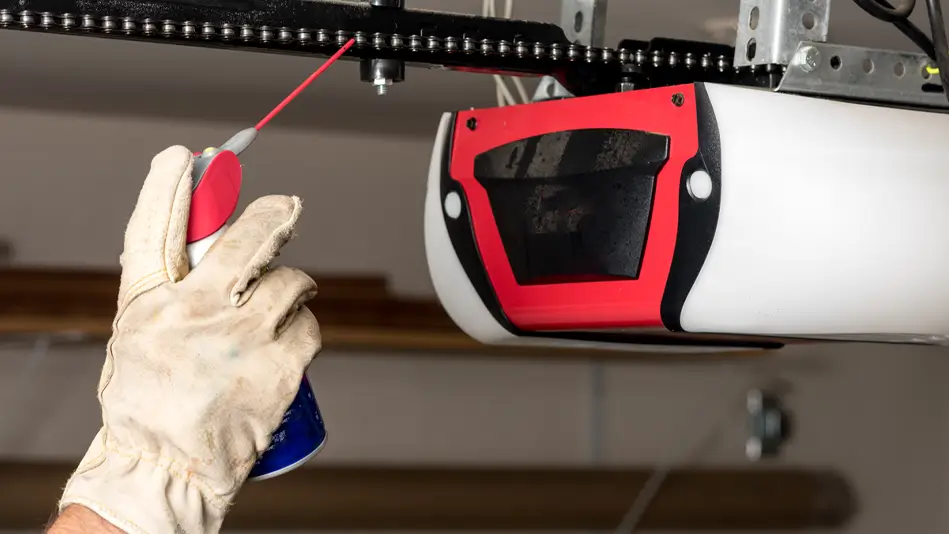
Spray a garage-door safe lithium-based lubricant on the chain every few months. It keeps things quiet and cuts down on wear.
We recommend checking chain tension at least twice a year, or sooner if you notice strange noises or movement.
Repair or Replace? Here’s How to Tell
Not sure if your chain just needs a quick tune-up or if it’s time to replace the whole thing? You’re not alone. This is one of the most common questions we get.
Let’s break it down.
When a Quick Repair Should Do the Trick
If your opener is still working well and the chain looks mostly intact, you might not need to replace anything just yet. Here are the signs it’s probably safe to tighten and go:
- The chain is only slightly sagging, maybe half an inch or so
- You see a little surface rust, but the links still move freely
- The opener runs smoothly and quietly, just a little clunky when starting or stopping
- It’s the first time you’ve noticed the chain loose hasn’t been an ongoing issue
A quick adjustment (like the one above) can get you back on track in minutes.
When It’s Probably Time to Replace
If any of these are happening, a simple tightening probably won’t cut it and could even make things worse:
- The chain looks stretched, or you see gaps between the links
- It’s been tightened multiple times and still rattles or slips
- You notice the sprocket teeth are worn, or the chain’s rubbing the cover
- The opener is over 8–10 years old, especially if it’s noisy or inconsistent. Most chains last about 10 to 15 years, but if yours is nearing that mark and acting up, it’s probably safer to replace it now than wait for a full failure.
- There’s visible damage to the chain or tensioner bracket
You’re better off replacing the chain or, depending on age, the opener altogether.
Real-Life Example: The Chain That Wouldn’t Quit (Loosening)
“I once helped a neighbor whose garage door chain made this weird little ping-ping sound every time it started up. The first time, we tightened it, and the noise stopped. But just a few months later, it was sagging again, the same noise, the same problem.
We ended up swapping it out for a new chain-drive system. After that, it ran smoothly as butter and they haven’t had an issue since.”
Not Sure Which Side You’re On?
If your opener is acting up and you’re not sure whether to repair or replace, don’t guess. We can take a look and give you the real answer, no pressure, no upsell.
Replacing a chain is often more affordable than waiting until it breaks and damages other parts. Preventive repairs almost always cost less.
Safety First: When to DIY and When to Call in a Pro
Some chain issues are an easy fix. Others? Not worth the risk.
Here’s how to know the difference and when to let a pro step in.
Always Put Safety First
Before touching anything:
- Unplug the opener. Never work on a garage door while it’s powered.
- Use a sturdy ladder. Don’t climb anything wobbly.
- Pull the red emergency release. This keeps the opener from accidentally kicking on while you work.
Tip: If your door is already mid-cycle and acting weird, stop everything. It’s not worth pushing through if it feels unsafe.
Signs It’s Time to Call a Pro
Some issues look simple, but they point to bigger problems underneath. Here’s when to skip the DIY and call someone in:
- The chain has jumped off the sprocket (this can cause the door to fall or slam)
- The sprocket teeth are worn down or missing
- You’ve already tightened the chain, but it keeps loosening back up
- The chain snapped, shows deep rust, or stretches
- You hear grinding or burning smells from the motor
We’re Here If You Need Backup
Not 100% sure what’s going on? No stress. We can inspect the chain, sprockets, and opener motor to make sure everything’s running safely and smoothly.
If a quick adjustment’s all you need, we’ll handle it on the spot. If something needs replacing, we’ll walk you through it without any pressure.
Don’t Let a Loose Chain Turn Into a Big Repair
A loose garage door chain isn’t just annoying, it’s a warning sign. The good news? In many cases, it’s a simple fix you can handle yourself in just a few minutes.
But if your chain keeps coming loose, starts jumping off the sprocket, or you’re seeing worn parts? That’s when it’s smarter (and safer) to call in the pros. Keeping your garage door chain properly tightened doesn’t just protect the opener. It keeps your home and family safe every time that door moves.
Whether you need help tightening a loose chain or replacing a worn one, we’ve got your back. Call Two Brothers Garage Doors today or book your visit online. We’ll get your garage door back on track in no time.

